
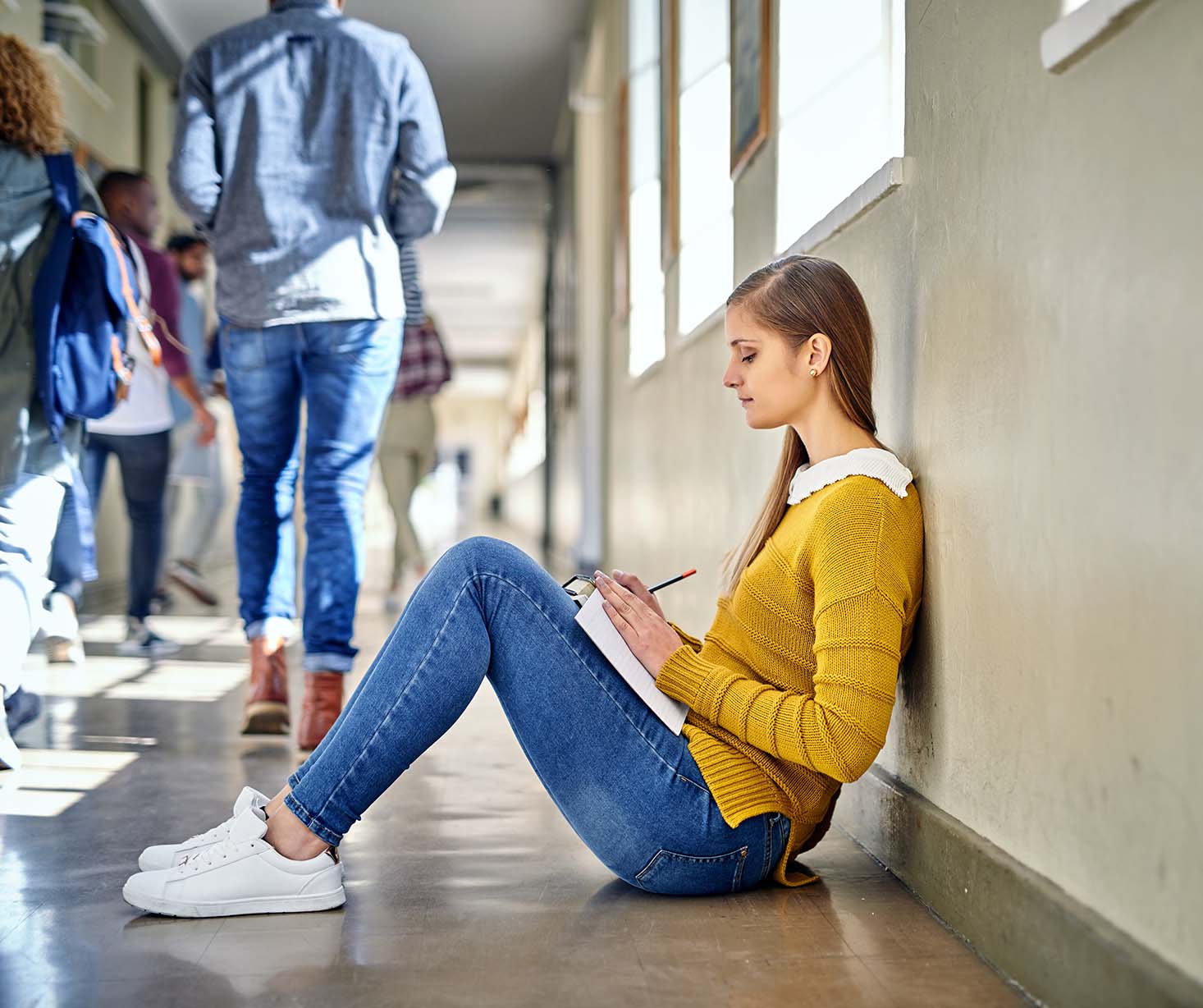
Social anxiety is more prevalent in students than ever before. Many students begin to develop anxiety in middle and high school with many carrying it over into adulthood. Social anxiety can pose a big issue for students as it can impact their quality of life at school and in turn their academic career. Because of this, I want to dive deeper into the topic and how the power of personalized learning can help students overcome this hurtle!
What is Social Anxiety?
Before we jump into how personalized learning helps students with social anxiety, we must first uncover what the term means. Mayoclinic.org defines social anxiety as the following:
It’s normal to feel nervous in some social situations. For example, going on a date or giving a presentation may cause that feeling of butterflies in your stomach. But in social anxiety disorder, also called social phobia, everyday interactions cause significant anxiety, self-consciousness and embarrassment because you fear being scrutinized or judged negatively by others.
In social anxiety disorder, fear and anxiety lead to avoidance that can disrupt your life. Severe stress can affect your relationships, daily routines, work, school or other activities.
Social anxiety disorder can be a chronic mental health condition, but learning coping skills in psychotherapy and taking medications can help you gain confidence and improve your ability to interact with others.
Anxiety comes in all shapes and sizes but social anxiety can create a direct barrier to learning for students in larger classroom settings. As students get older, the class sizes get bigger which is a large contributing factor. Other factors can play a role to include: bullying, lack of support network, etc.
Why Traditional Schools Exacerbate Social Anxiety
Every student handles pressure differently. While some students find themselves to be social butterflies, many others begin developing social anxiety in traditional school environments. The reasoning for this can come down to the following reasons:
- Class Size
- Peer Pressure
- Bullying
- Rigid Learning Schedules
Many students experience these pressures starting in middle school. While some students may build up a resilience to it, most will develop varying degrees of social anxiety as a cause of it.
What is Personalized Learning?
Now that we’ve spent some time discussing what social anxiety is, I’m sure you’re wondering what personalized learning is and how it can alleviate social anxiety. We mentioned earlier that when students get older, class sizes will get bigger. While this is common for most schools, some schools specialize in smaller, more focused learning settings. These settings are implicitly designed to cater to the students learning preferences and needs. Private schools are often your best bet for getting a personalized learning environment. We recommend looking into schools with a low student-to-teacher ratio as a start.
Types of Personalized Learning Environments
One-on-One Instruction
Institutions like our in-person school: The Tenney School conducts classes in a one-on-one setting! These types of schools have one-on-one classes for varying academic subjects. The benefit of this is students get the most individualized and personalized learning experience possible. At our school, the pace of the classroom is entirely dictated by the student. If a student is understanding the material, the class can speed up. When a student has difficulties with subjects or lessons, the class can slow down. On top of this, we allow teachers to decide when a student is ready for an exam allowing for full flexibility in the classroom.
Online or Virtual Learning Platforms
This may come as a surprise but online and virtual learning platforms allow for an increase in flexibility and personalized learning! There are many different types of online learning environments, but the most important for today’s topic are synchronous classrooms. These classrooms function similarly to how an in-person class operates but eliminates the typical classroom distractions. Students still attend class at a specific time and communicate with the teacher directly. You can still raise your hand, albeit virtually! Tenney School Live takes this a step further by making all of our online classes one-on-one! This gives you the ultimate flexibility from the comfort of home!
Adaptive Learning Platforms
These platforms, while similar to virtual learning platforms, change on the fly to match the students pace in the classroom. These types of learning platforms are generally present in asynchronous learning environments. This means that students move through the lesson content at their own pace through pre-recorded lessons, then an learning AI assigns homework and other assignments based on how the student is doing in the class. This is the newest platform of the 3 we discussed and is rapidly developing.
Which is Best for Your Student?
Shopping around is your best bet, but before anything – open a dialog with your student! Talk to them about their learning preferences and see what they have to say about it. Once you have a good idea, we recommend you inquire with the schools and programs that make sense to you. Letting the school know what the situation is a great idea to get some direct recommendations from them. If you think a one-on-one learning platform is for you, I recommend you inquire today to get more info!